Monday, 22 July 2013

PROFIT versus CORPORATE SOCIAL RESPONSIBILITY


This is a quick blog-post about two articles from the opposite side of the spectrum that I ended up liking regarding profits and Corporate Social Responsibility (CSR).

During my MBA at the London Business School, we had to take an Ethics class and, while I loved it, I remained convinced that looking for ethical behaviour from companies was nonsense... unless ethical behaviour led to higher profits or, vice-versa, unethical behaviour led to lower profits. To quote Ambrose Bierce, "Piracy is Commerce without its folly-swaddles, just as God made it".

Monday, 15 July 2013

SOMALIA: INSTITUTIONS, FREE MARKETS & DEVELOPMENT


“You are a sneaking Puppy, and so are all those who will submit to be governed by Laws which rich Men have made for their own Security...”


Attributed to the pirate Captain Bellamy, 1717


This is going to be my first foray into development economics in this blog.

What with the crisis and stuff, I never got around to write much about this branch of economics and yet I think it stands to be interesting precisely because development economics is forced to deal with the reality of countries trying (and often failing) to grow or catch up and thus it is forced to include the dreaded political and even cultural (gasps) factors into its analysis.

I would like to consider more specifically the case of Somalia because, well, if there is a basket case of a nation, this is it.

Monday, 1 July 2013

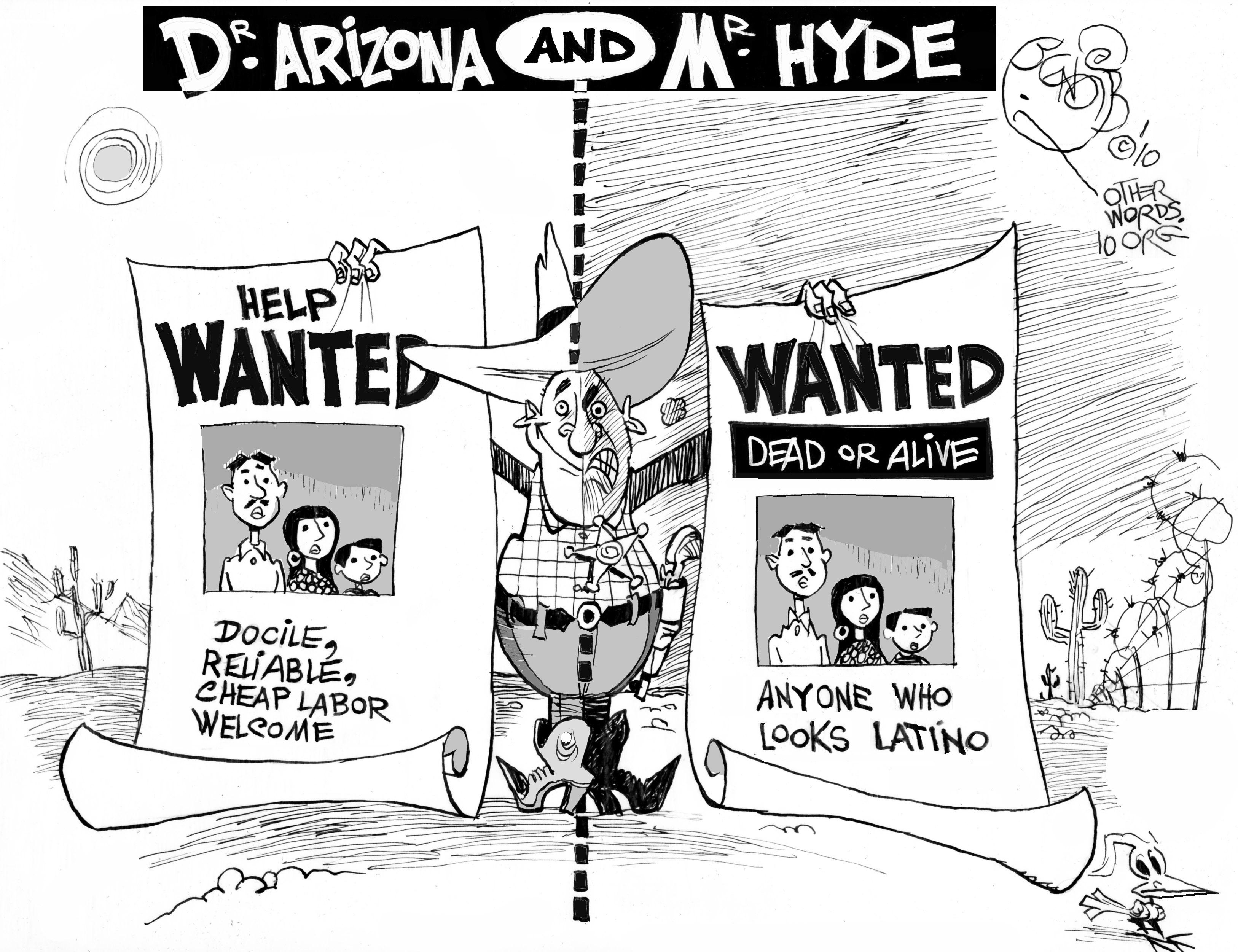
IMMIGRATION & TRADE: DISTURBED MACRO-THOUGHTS


This is another one of those blog-post I meant to write a long time ago and never quite got around to doing it. In this case, though, there is more than mere procrastination at play.

Immigration and trade are difficult areas for me - I generally favour positions away from most of the mainstream economists and from what is classically termed 'the liberal elites', a group I would feel I naturally belong to if it wasn't for my lack of an upper class income.

Still, I shall soldier on and hope that, despite contradicting and disagreeing with everyone, I don't end up making a fool of myself. Since we're in the middle of the US Congress attempting to reform its immigration policies, I will first concentrate on the issue of immigration.

Wednesday, 19 June 2013

WHY "ELYSIUM" IS NOT THE BEST THE RICH CAN DO...


From "Battle Angel Alita" to "Elysium" and including "In Time" or "Hardwired" (the book), it's been a regular sciences-fi/cyberpunk trope that, in the (near) future, the rich would exile themselves into safe, luxurious compounds leaving the rest of us to fight over scraps.


And there are enough real-life instances of this segregation (gated communities etc) actually happening to make it all sounds rather plausible. But, in my modest opinion, such a situation is not actually "the best" the rich can hope for, even from a purely selfish point of view.

In this blog-post, I will try explain that belief to address a comment James made earlier: "Your views seem to differ from those of most left-wingers in that you view socialism as a vehicle for advancing middle-class interests. Clearly, you are not alone in this belief: I remember reading an article by a left-wing columnist (it might have been Robert Reich), in which he lamented the left’s failure to persuade the middle-classes that their interests would be best served by siding with the poor against the rich".

Monday, 17 June 2013

ON SCOTT SUMNER & MONETARY POLICY


It's been a while since I talked about monetary policy and I've meant to write a specific blog-post about it for a long time. With Abenomics well under way and some initial successes to show for it, some discussion on this very subject seems timely.

Scott Sumner's blog is one of my favourite place for monetary matters. As I will explain later on, I do not share Prof. Sumner's ideas but his blog is great to keep abreast of any new developments with regards to monetary policy or monetary thinking.

Two entries caught my attention a few weeks ago and pushed me to finally get on with writing this post, "Nunes on Krugman" and "Bartlett on Keynes" , but Scott Sumner also wrote about Abenomics specifically: "Why 'Will Abenomics succeed?' is the wrong question" .

More recently, I've read Noah Smith "The Zero Upper Bound" on the subject of Japanese monetary policy as well as John Mauldin's thoughts on the same...

Tuesday, 11 June 2013

CONSERVATIVES: JAMES SHOOTS BACK!


James is back! And he’s got stuff to say!


For legibility, I will make his replies into a guest blog-post (my first, Yayyy!) with a bit of structuring thrown in.

This is a lengthy post and it will not always be easy to follow if you've not read the previous blog-posts. So do read those first.

I will reply (of course) but in another blog-post where I will summarise our main differences and try to answer them so that other readers may get an holistic view of the discussion.

Wednesday, 5 June 2013

MERITOCRACY & BEN BERNANKE


Short post: Via Matt Yglesias and Kevin Drum, I got made aware of a speech Ben Bernanke gave to students at Princeton and which contains a paragraph about "meritocracy".

"The concept of success leads me to consider so-called meritocracies and their implications. We have been taught that meritocratic institutions and societies are fair. Putting aside the reality that no system, including our own, is really entirely meritocratic, meritocracies may be fairer and more efficient than some alternatives. But fair in an absolute sense?

Think about it. A meritocracy is a system in which the people who are the luckiest in their health and genetic endowment; luckiest in terms of family support, encouragement, and, probably, income; luckiest in their educational and career opportunities; and luckiest in so many other ways difficult to enumerate—these are the folks who reap the largest rewards. The only way for even a putative meritocracy to hope to pass ethical muster, to be considered fair, is if those who are the luckiest in all of those respects also have the greatest responsibility to work hard, to contribute to the betterment of the world, and to share their luck with others.

As the Gospel of Luke says (and I am sure my rabbi will forgive me for quoting the New Testament in a good cause): "From everyone to whom much has been given, much will be required; and from the one to whom much has been entrusted, even more will be demanded" (Luke 12:48, New Revised Standard Version Bible). Kind of grading on the curve, you might say".